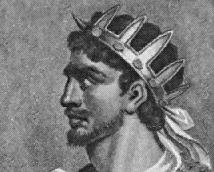
And it's also about opera. Riccardo Muti is going to direct the Met in an Italian opera called "Attila." Frankly, I've never even heard of this opera, although I've heard of the composer, some paisano named Joe Green. The Times isn't very helpful when it comes to actually describing the opera; the article spends more time on personality (Muti, apparently, is one) than on music. All we learn about the opera from the Times is that "Roman general Ezio plots with Attila to divide up the empire between them, Ezio sings, 'Avrai tu l'universo, resti l'Italia a me!' 'You can have the universe, leave Italy for me!'"
Based on that one line about the universe, I'm guessing that the opera treats Attila as sort of the Darth Vader of the Fifth Century. OK, so maybe I'm being a little unfair to D-Vade, who surely would not have foregone Italy. But you see what I mean.
Since the article leaves most of the remainder of the opera "Attila" to my own feverish imagination, I decided I'm going to make up the plot right now. It's all about me.
Here is a short summary of the opera, as I conceive it:
Act I.
When the curtain rises, a shepherd and his sheep are seen on the hillside of what is now northern Italy. The sheep sing "Pasta e fagioli," a song in which they complain of their bean-laden diet, which they fear will lead to increased methane emissions and possibly cause the Medieval Warm Period in a few centuries.
In the next scene, the sheep are seated in the village wine bar, where they are being served by several extremely robust women in odd costumes featuring helmets and breastplates, who sing loudly about something, but we're not sure exactly what.
In a darkened corner of the wine bar, lit only with a single red spotlight, the village mayor, Barachi, is singing marcatissimo to his mother on his cell phone. In his aria "Ma, la mamma" ("But Ma!"), Barachi tries to explain to his mother that cell phones won't even be invented for another 1500 years.
We move to the village square, where Barachi's wife, Michaela, warns the villagers that Attila and his obese Huns have been sighted leaving the wurst and sauerkraut restaurant near Exit 14B-flat on the Eselbahn. It is only a short trip from there to the village. She urges the local militia members to gird their loins for battle. The militia members reply that they no longer have any loins, having been forced to sell them as a result of bad real estate deals. Singing "Il predecessore" ("The predecessor"), they blame the former mayor, nicknamed "Il Cespulio" ("The Bush").
As the militia members sing the well known chorus "Perché dovrei preoccuparmi" (roughly, "What, me worry?"), Attila and his Huns ride into town on their bicycles, stark naked except for loincloths. Attila, who by the way is a baritone, and not some typical, effeminate tenor, orders his men to burn down the wine bar. Barachi and the robust women escape, but, sadly, the sheep are roasted in the fire. One hears the sheep singing "Fa caldo qui dentro" ("It's hot in here"). Attila and Barachi and the entire village close Act I with a raucous banquet of roast lamb, singing the finale "O, il gusto di montone" ("Oh, the taste of mutton").
Act II.
The curtain rises as Attila awakens from a lamb-induced slumber. He belches. Then he sings the "pussy cat" aria, so named because in the aria Attila calls Roman general Ezio a pussy (cat) for offering Attila the universe if Ezio can just have Italy ("Avrai tu l'universo, resti l'Italia a me"). Attila mocks, "Chi diavolo vuole l'Italia? La pizza succhia uova." ("Who the hell wants Italy? The pizza sucks eggs.").
In the next scene, the village maidens appear in the village square and ponder, in a complex four-part contrapuntal chorus, why the savage yet very attractive Huns have not been molesting them: "Forse abbiamo bisogno di dimostrare più scissione" ("Perhaps we need to show more cleavage"). The Huns appear and explain the reason. Riding a bicycle while wearing only a loincloth has wreaked havoc on their private parts: "I pericoli del perineo" ("The perils of perineum"). Attila enters. He catches the eye of the fairest of the maidens and sings to her, "Siete deliziose" ("You are delectable" -- often translated as "I would enjoy you as my next meal"). Meanwhile, Barachi and Michaela join the maidens and Huns and reminisce about their own courtship: "Appuntamento al buio" ("Blind date").
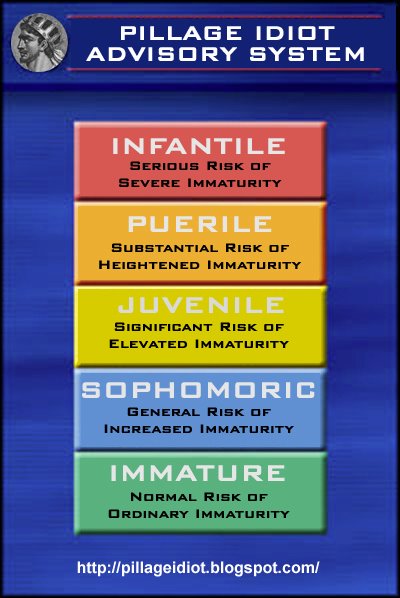
There follows a reprise of Pasta e fagioli, this time sung by the militia members, with appropriate sound effects. They laugh about the effect of methane emissions on global warming in a choral piece entitled "La mazza da hockey" ("The hockey stick"). Trying to impress the fairest maiden with his comparative sophistication, Attila sings "Giovanile!" ("Juvenile!").
In the opera's finale, Attila marries the fairest maiden in a Hun-like ceremony. A festive meal is prepared: deep-fried turkey, using a frozen bird, despite a stern warning from the Underwriters Laboratories. Needless to say, the fryer collapses, spilling super-heated oil onto the wooden platform and starting an enormous fire. All sing "Infiammato!" ("On fire!"). When Barachi frantically tries to line up the village militia to put out the fire, the militia members tell him they no longer have water, having been forced to sell it as a result of bad real estate deals. Attila and Mrs. Attila leave the village on his bicycle, Harley-style, with Mrs. Attila on back. Unlike the Hun, who is still clothed in a loincloth, Mrs. Attila wears something tasteful.
Everyone sings very loudly, for no particular reason, and the curtain falls.



2 comments:
Sounds like every opera I've ever attended, except no love songs. How about some love songs?
Miriam, not to be technical or anything, but in this context, Attila's song "Siete deliziose" and Barachi and Michaela's song "Appuntamento al buio" have to be considered love songs.
Here are the lyrics to the blind date song.
Post a Comment